

Building a cost-effective FTTH distribution network is not the same as choosing the cheapest cable, splitter, closure or distribution box.
In many projects, the lowest-cost component combination can actually increase total deployment cost because it creates more splicing, more field labor, more maintenance points, poor fiber utilization or expensive future expansion.
For B2B purchasers, telecom contractors, distributors and network planners, the right commercial question is:
“How can the network meet current subscriber demand while keeping installation, maintenance and future expansion costs under control?”
That requires a system-level approach.
A practical cost-optimization sequence is:
Demand → Architecture → Splitter Strategy → Fiber Count → Distribution Points → Cable Construction → Installation Method → Maintenance → Future Expansion → Total Cost
The objective is not minimum initial BOM cost.
The objective is minimum practical lifecycle cost per connected subscriber.
Quick Answer
A cost-effective FTTH distribution network usually depends on five things:
- Using the right splitter architecture
- Avoiding unnecessary feeder and distribution fibers
- Placing distribution points where they reduce installation work
- Standardizing boxes, cables and interfaces
- Planning enough future capacity without excessive oversizing
The most important commercial principle is:
Do not optimize one component in isolation.
A cheaper splitter can increase enclosure cost.
A lower-fiber-count cable can increase future construction cost.
A smaller box can save money today but require replacement later.
A pre-connectorized terminal may cost more per unit but reduce field labor substantially.
The best FTTH design balances all of these factors together.
Cost Drivers in an FTTH Distribution Network
| Cost Area | Typical Cost Risk | Better Decision Approach |
| Feeder fiber | Oversized cable or expensive future upgrade | Match fiber count to architecture and growth |
| Distribution fiber | Too many fibers or poor branch planning | Optimize splitter placement and local demand |
| Splitters | Excessive stages or wrong split ratio | Balance optical budget and fiber savings |
| Distribution boxes | Too many small boxes or oversized units | Standardize practical capacity tiers |
| Splice closures | Excessive splice points | Simplify route and branching |
| Field labor | Too much splicing or manual termination | Use factory-prepared products where useful |
| Drop connections | Long or poorly planned drops | Position terminals closer to subscriber clusters |
| Maintenance | Poor labeling and dense layouts | Design for serviceability |
| Expansion | No spare capacity | Add controlled reserve where upgrade cost is high |
| Inventory | Too many product variants | Standardize component families |
1. Start With Subscriber Density
FTTH distribution economics change significantly between:
- Dense urban buildings
- Suburban neighborhoods
- Rural villages
- Industrial parks
- Multi-dwelling units
A design that is cost-effective in one environment may be inefficient in another.
For example, a dense apartment building can justify high port density because many subscribers are concentrated in a small area.
A rural network may need fewer ports per distribution point but longer cable routes.
Therefore, before selecting components, define:
- Homes passed
- Expected take rate
- Subscriber density
- Distance between subscriber clusters
- Building type
- Future growth
This information determines how aggressively the network should be centralized or distributed.
2. Do Not Design Only for Homes Passed
Homes passed and homes connected are different economic metrics.
If a project passes 10,000 homes but initially connects only 3,000 subscribers, building full active capacity for all 10,000 on day one may tie up unnecessary capital.
A more efficient architecture may deploy:
- Feeder capacity for future demand
- Distribution infrastructure for homes passed
- Drop connections only when subscribers activate
This staged approach can reduce early project cost.
However, the passive infrastructure should still avoid requiring major reconstruction when take rate increases.
The balance is:
Build the expensive civil infrastructure once, but activate subscriber-level components progressively where practical.
3. Splitter Architecture Has a Major Cost Impact
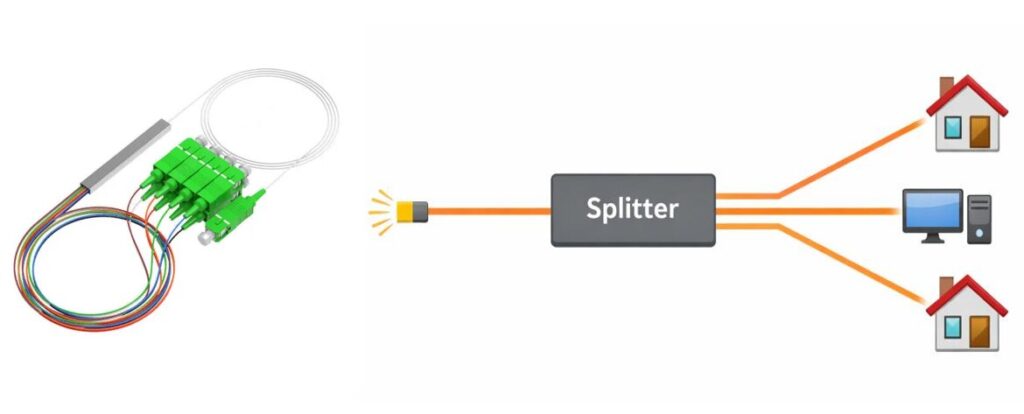
Splitter placement directly affects:
- Feeder fiber count
- Distribution fiber count
- Box quantity
- Splicing
- Maintenance
- Optical loss
For this reason, splitter strategy should be treated as a network economics decision.
Centralized Splitting
A centralized architecture places the splitter at a main distribution point.
Potential advantages:
- Easier splitter management
- Easier port reassignment
- Simpler troubleshooting
- Better visibility of spare capacity
Potential disadvantages:
- Higher distribution fiber count
- Larger cabinets or boxes
- Longer subscriber distribution routes
Cascaded Splitting
A cascaded architecture divides splitting across two or more stages.
Potential advantages:
- Lower distribution fiber count
- Smaller local cable requirements
- Potentially better adaptation to dispersed subscribers
Potential disadvantages:
- More splitter locations
- More optical loss
- More maintenance points
- More complex troubleshooting
The cheaper architecture depends on geography and subscriber density.
4. Use Split Ratios to Balance Fiber Cost and Optical Budget
A high split ratio reduces the number of feeder fibers required per subscriber.
That sounds economically attractive.
But higher split ratios also introduce more optical loss.
If the split ratio becomes too aggressive, the project may need:
- Better optics
- Lower-loss components
- Shorter distances
- Fewer connector points
Those requirements can offset the expected savings.
Practical Decision Logic
Do not ask:
“What is the cheapest splitter ratio?”
Ask:
“What split ratio gives the best balance between fiber utilization, optical budget and future flexibility?”
Common options may include:
- 1×8
- 1×16
- 1×32
- 1×64
The final choice should follow the actual PON budget and network architecture.
5. Reduce Fiber Count Where Architecture Allows It
Fiber cable cost increases with fiber count, but the cable itself is not the only consideration.
Higher fiber counts can also increase:
- Closure capacity
- Splice trays
- Installation complexity
- Cable diameter
- Handling difficulty
Therefore, distribution fibers should be sized according to actual network need.
However, aggressive downsizing creates another problem: future expansion.
Better Approach
Use enough fiber for:
- Current architecture
- Reasonable reserve
- Future subscribers
- Operational spare
- Network rearrangement
Avoid both extremes:
Too much unused fiber = unnecessary capital
Too little fiber = expensive future construction
6. Put Spare Capacity Where It Is Expensive to Add Later
Not every part of the FTTH network needs the same level of reserve.
This is one of the most useful cost-control principles.
For example:
Feeder Cable
Adding a second feeder cable later may require major construction.
Therefore, more reserve capacity can be justified.
Distribution Box
Replacing a 16-port box with a 24-port box may be relatively easier.
Therefore, excessive oversizing may not be necessary.
Drop Cable
Usually installed when a subscriber is connected.
Little or no reserve is required in the same sense.
The rule is:
Put more spare capacity in infrastructure that is expensive to reconstruct.
7. Distribution-Point Placement Can Save More Than Product Price
A badly located distribution terminal can increase drop-cable length for every subscriber.
Even if the box itself is cheap, the total network cost rises through:
- More cable
- Longer installation time
- More supports
- More routing complexity
Imagine a 16-port terminal serving subscribers spread across a wide area.
If moving the terminal closer to the subscriber cluster reduces each drop cable by 20 meters, the total cable and labor saving can become significant.
Therefore, terminal location should consider:
- Subscriber concentration
- Average drop length
- Pole/building availability
- Installation access
- Maintenance access
- Future subscribers
8. Avoid Too Many Small Distribution Boxes
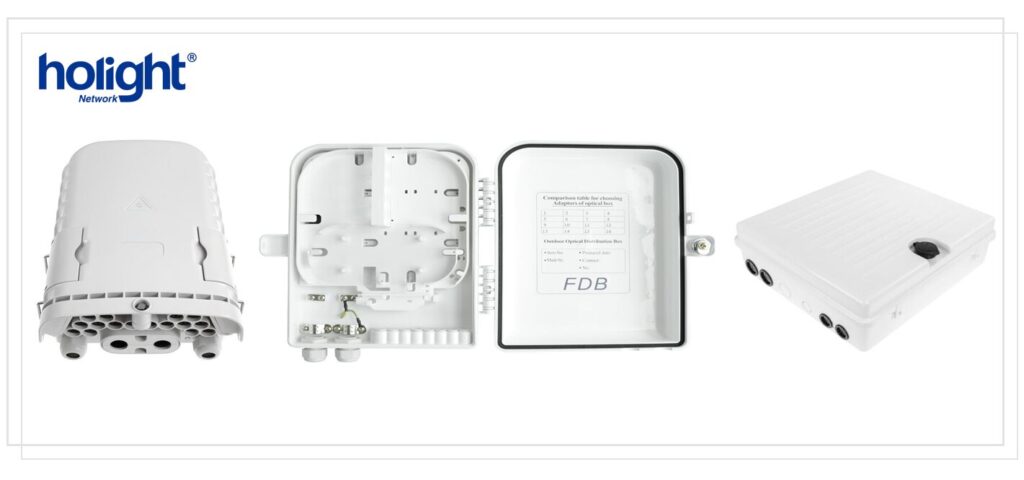
Small FTTH boxes can be inexpensive individually.
But using too many of them can increase:
- Mounting labor
- Cable entry work
- Splicing
- Documentation
- Maintenance locations
- Inventory
In dense areas, larger distribution boxes can sometimes lower overall cost.
However, oversized boxes in low-density areas waste space and capital.
Practical Capacity Strategy
Instead of using many unique capacities, a project can standardize around a few common sizes such as:
- Small
- Medium
- Large
For example, the project may standardize 8-port, 16-port and 24-port or 32-port designs depending on the network architecture.
This simplifies purchasing and field inventory.
9. Do Not Oversize Every Distribution Box
Standardization does not mean buying the largest box everywhere.
A 32-port box may appear flexible, but if most locations serve only 8 subscribers, it creates unnecessary:
- Product cost
- Pole/wall space
- Installation weight
- Visual impact
Use capacity according to subscriber density and expected growth.
A good design may reserve larger boxes for high-density clusters and smaller units for dispersed branches.
10. Simplify Splitter Housing Formats
Using too many PLC splitter formats increases purchasing complexity.
A project may contain:
- Bare splitter
- Mini tube splitter
- ABS splitter
- Cassette splitter
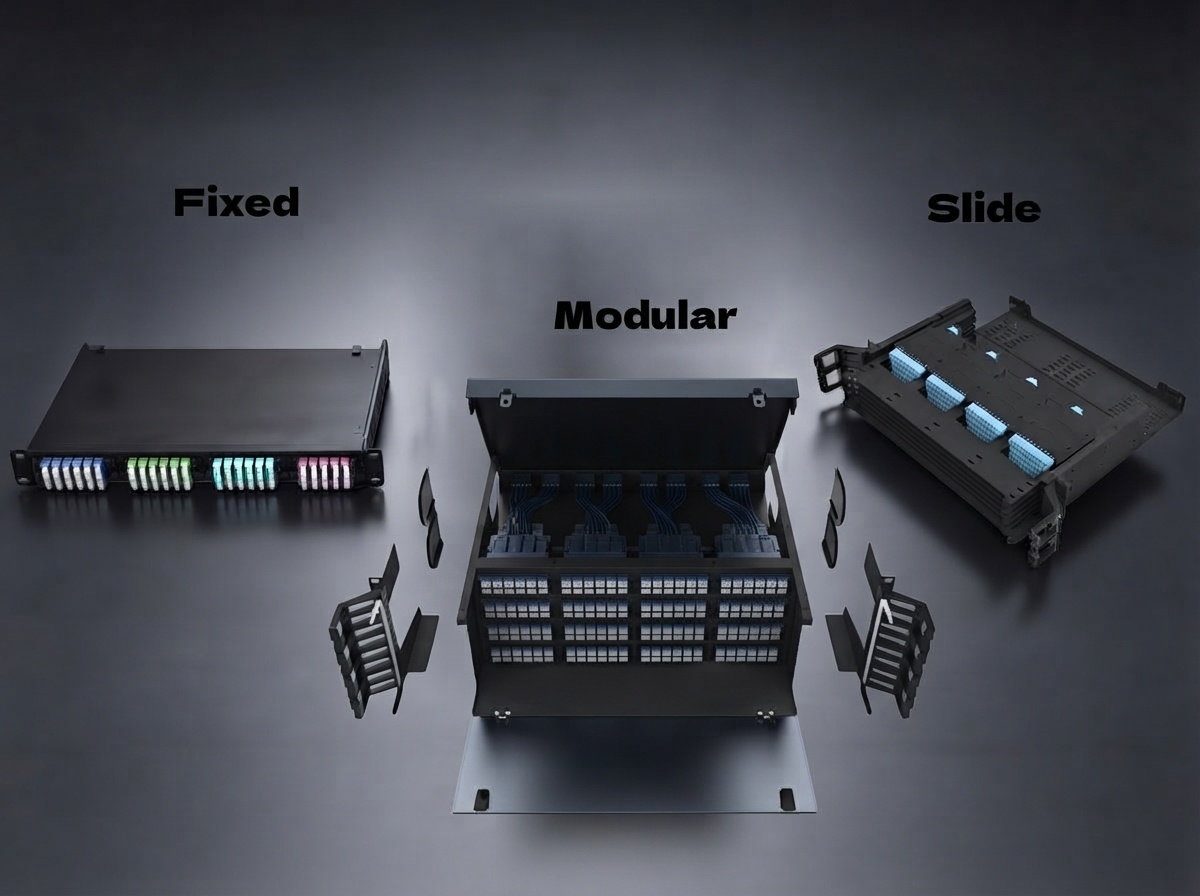
- LGX module
Each format has a valid application, but unnecessary mixing creates:
- More SKUs
- More spare inventory
- More installer training
- More compatibility checks
For a large rollout, standardize one or two preferred splitter formats where practical.
For example:
- Compact mini tube splitter inside sealed field boxes
- Modular cassette/LGX splitter inside larger cabinets
This creates a clearer installation strategy.
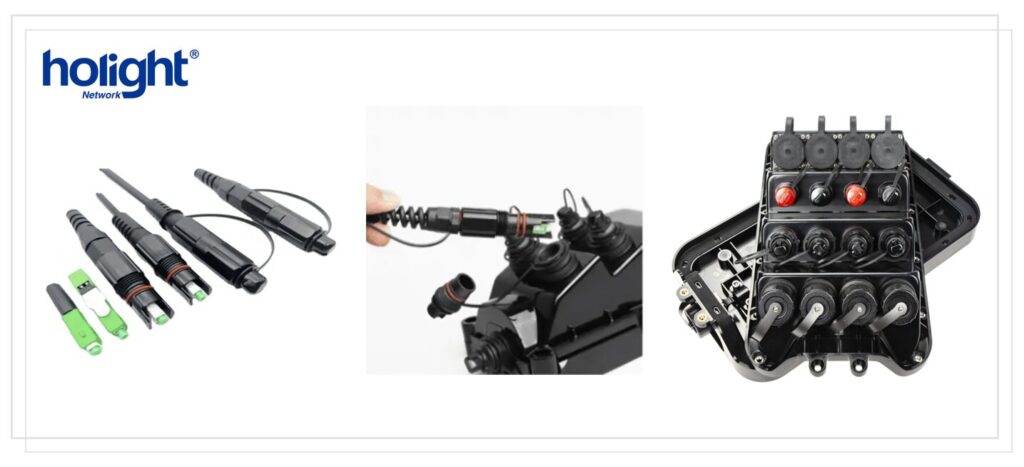
11. Select Pre-Connectorized or Spliced Architecture by Labor Economics
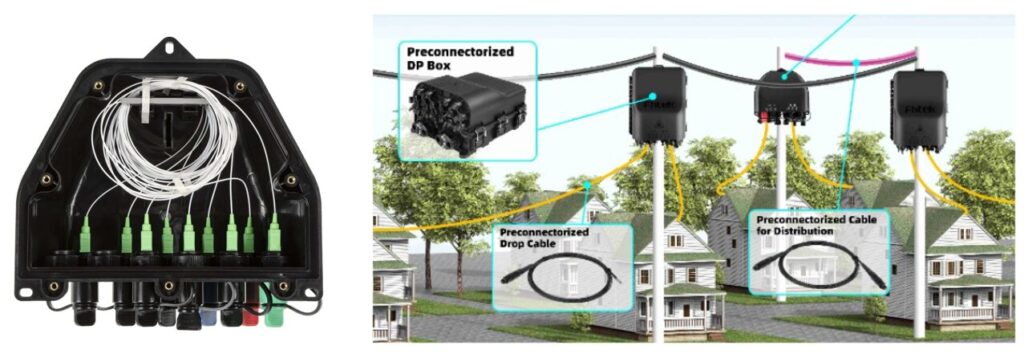
Pre-connectorized products usually cost more at the component level.
But they can reduce field labor.
Fusion-spliced products may have lower component cost but require more:
- Skilled technicians
- Fusion splicers
- Preparation time
- Testing
- Work space
The correct decision depends on local labor economics.
Pre-Connectorized Architecture May Be Attractive When
- Labor is expensive
- Deployment volume is high
- Installation must be fast
- Technician skill varies
- Subscriber activation is frequent
Fusion-Spliced Architecture May Be Attractive When
- Skilled labor is available
- Routes vary significantly
- Permanent joints dominate
- Connector count should be minimized
Do not compare only component price.
12. Standardize Adapter and Connector Types
Multiple connector families increase both inventory and operational cost.
If one section uses SC/APC, another SC/UPC and another LC without a strong reason, technicians must manage:
- Different patch cords
- Different adapters
- Different cleaners
- More spare parts
Where the network architecture allows it, standardization can simplify:
- Procurement
- Training
- Maintenance
- Troubleshooting
In many PON access networks, SC/APC is commonly used, but the selected interface should still follow project requirements.
The principle is standardization, not universal connector preference.
13. Reduce Unnecessary Connector Interfaces
Connectorized interfaces improve flexibility, but each additional mating point adds:
- Adapter cost
- Connector cost
- Optical loss
- Cleaning requirements
- Maintenance risk
Permanent connections that do not need frequent access may be better fusion-spliced.
Service points may benefit from connectors.
A cost-effective design therefore uses:
Splicing for permanent infrastructure
and:
Connectorization where accessibility and replacement create real value
This avoids both over-connectorization and excessive permanent splicing.
14. Control Cable OD and Construction
A larger, heavier cable may provide more mechanical capability than the route actually needs.
This increases:
- Material cost
- Shipping cost
- Handling difficulty
- Closure size requirements
At the same time, a cable that is too light for the installation can increase failure risk.
Cable selection should match:
- Fiber count
- Tensile requirement
- Aerial/duct/wall route
- Indoor/outdoor use
- Armoring requirement
- Water blocking
- UV exposure
Do not over-engineer every route with the same heavy-duty cable.
15. Use Different Cable Types for Different Network Sections
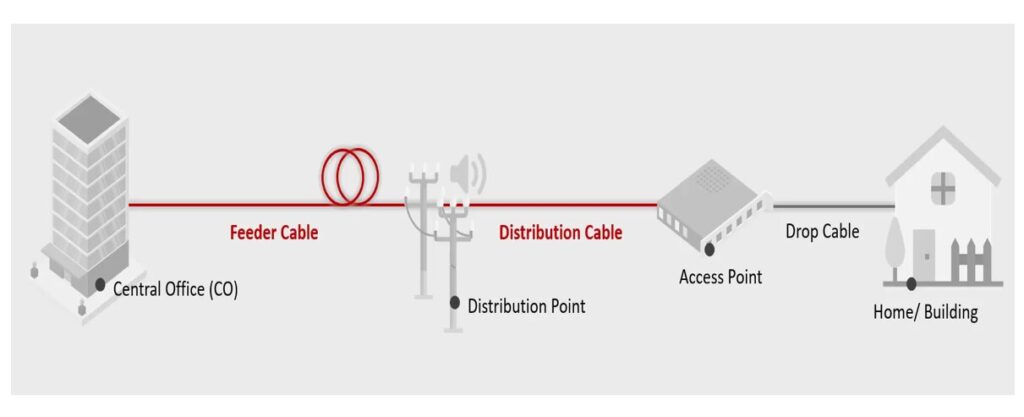
A cost-effective FTTH network does not necessarily use one cable construction everywhere.
For example:
Feeder
May require:
- Higher fiber count
- Strong outdoor construction
- Long-distance routing
Distribution
May prioritize:
- Easier branching
- Mid-span access
- Moderate fiber count
Drop
May prioritize:
- Flexibility
- Bend performance
- Small diameter
- Easy termination
Using a feeder-style cable for every subscriber drop would be unnecessarily expensive.
Likewise, using drop cable for distribution infrastructure would be inappropriate.
16. Avoid Unnecessary Armoring
Armored cable can provide valuable mechanical protection.
But it also adds:
- Cost
- Weight
- Diameter
- Installation complexity
Use armoring where the route justifies it, such as certain:
- Direct-burial
- Rodent-risk
- Industrial
- Mechanically exposed installations
Do not specify armor simply because the cable is outdoors.
Many aerial or duct installations can use different construction depending on local conditions.
17. Control Drop-Cable Length
Drop cable is multiplied across every connected subscriber.
That makes seemingly small length differences commercially important.
If 5,000 subscribers each use 10 meters more cable than necessary, the project consumes an additional 50 km of drop cable.
Therefore, cost optimization should include:
- Terminal placement
- Route planning
- Standard drop lengths
- Site measurement
- Service loops
The goal is not minimum length at all costs.
A small practical reserve is necessary, but excessive slack across thousands of drops becomes expensive.
18. Use Standard Drop Lengths Where Practical
For pre-connectorized deployments, standardized lengths can simplify inventory.
Examples might include several length categories rather than custom-making every cable.
Advantages can include:
- Faster ordering
- Easier stock control
- Faster field replacement
- Simpler packaging
However, too few standard lengths can create excessive slack.
The length strategy should reflect site geometry.
19. Reduce Field Splicing at Repetitive Subscriber Points
Subscriber activation can become one of the largest recurring labor costs in an FTTH rollout.
If each new subscriber requires:
- Fiber preparation
- Fusion splicing
- Splice protection
- Testing
the labor burden accumulates.
Pre-connectorized terminals or field-installable connectors can reduce activation time where appropriate.
The right decision depends on:
- Subscriber activation volume
- Labor rates
- Installer skill
- Failure rates
- Maintenance philosophy
20. Do Not Replace Fusion Splicing Everywhere Just to Save Time
The opposite mistake also occurs.
Trying to eliminate all fusion splicing can create too many connector interfaces.
That increases:
- Optical loss
- Connector cost
- Adapter cost
- Cleaning requirements
- Maintenance complexity
The cost-effective architecture normally combines methods.
Use connectors where they reduce operational cost.
Use fusion splicing where permanent low-maintenance joints make more sense.
21. Simplify Splice Closure Deployment
Every closure introduces:
- Product cost
- Installation labor
- Splicing
- Documentation
- Future maintenance
A route with unnecessary branching can require too many closures.
Better network planning can sometimes consolidate branches and reduce closure count.
However, excessive consolidation can increase cable lengths.
The correct balance depends on geography.
22. Select Closures With Enough but Not Excessive Capacity
A closure that is too small may need replacement.
A closure that is dramatically oversized wastes money.
Key factors include:
- Incoming cables
- Branch cables
- Fiber count
- Splice count
- Mid-span access
- Future branches
Choose closure capacity according to the expected route topology.
23. Use Mid-Span Access Where It Reduces Fiber Consumption
Certain distribution cable architectures allow selected fibers to be accessed while others continue through the route.
This can reduce:
- Number of separate cables
- Number of full cable cuts
- Fiber consumption
Mid-span access can be commercially valuable in linear distribution routes.
But it requires:
- Suitable cable design
- Appropriate closure
- Installer skill
- Clear fiber management
It should be planned rather than improvised.
24. Minimize Civil Work
In many FTTH projects, cable and passive components are not the largest cost.
Civil construction can dominate.
Examples include:
- Trenching
- Duct installation
- Pole work
- Building access
- Road crossing
Therefore, architecture should maximize the use of:
- Existing ducts
- Existing poles
- Existing pathways
- Existing building risers
A slightly more expensive passive component may be commercially justified if it avoids new civil work.
25. Design for Fast Installation
Installation efficiency affects total project economics.
Useful design features may include:
- Easy cable entry
- Clear splice trays
- Pre-installed adapters
- Preloaded splitters
- Convenient pole/wall mounting
- Tool-friendly enclosures
- Pre-terminated drops
Small reductions in installation time become important at scale.
If a product saves only five minutes per installation, that can still translate into substantial labor savings across thousands of sites.
26. Factory Preparation Can Reduce Field Cost
Factory preparation can include:
- Pre-installed adapters
- Pre-installed PLC splitters
- Pre-terminated pigtails
- Pre-cut cables
- Pre-connectorized drop cables
- Labeled ports
This moves work from an uncontrolled field environment into a repeatable manufacturing environment.
The economics are particularly attractive when:
- Product configurations are standardized
- Deployment volume is large
- Labor is expensive
- Installation quality must be consistent
27. But Avoid Over-Customization
Factory preparation becomes less economical if every site requires a unique configuration.
Too many custom variants create:
- Small production batches
- Inventory complexity
- Higher error risk
- Longer lead time
A stronger strategy is to create a limited number of standardized configurations covering most installations.
Custom solutions can then be reserved for exceptional sites.
28. Reduce Inventory SKUs
Every additional FTTH product variant creates hidden cost.
Inventory teams must manage:
- Different cables
- Different boxes
- Different splitter modules
- Different adapters
- Different patch cords
This can lead to:
- Wrong-product installation
- Higher stock levels
- Slow-moving inventory
- Procurement complexity
Standardization around a smaller number of proven products can improve project economics significantly.
29. Make Spare Parts Easy to Manage
Maintenance teams should not need dozens of unique replacement products.
A network using standardized:
- Splitter modules
- Adapters
- Boxes
- Drop connectors
can keep a smaller spare inventory.
This reduces both capital tied up in stock and field repair delays.
30. Labeling Saves Maintenance Cost
Labels may appear insignificant during procurement.
In large FTTH networks, poor identification causes wasted technician time.
Useful identification may include:
- Cable ID
- Fiber ID
- Splitter input/output
- Distribution-box number
- Port number
- Subscriber reference
Good labeling reduces troubleshooting time and connection errors.
It is a low-cost improvement with high operational value.
31. Plan for Maintenance Access
The cheapest enclosure is not economical if technicians cannot work inside it efficiently.
Poor internal design can create:
- Tangled pigtails
- Difficult splitter access
- Tight bend radius
- Hidden adapters
- Difficult splice-tray access
Select enclosures that allow technicians to:
- Identify fibers
- Access ports
- Replace splitters
- Clean connectors
- Add subscribers
Serviceability is part of lifecycle cost.
32. Keep Fiber Management Simple
Complex fiber routing increases installation and maintenance time.
Good distribution boxes and closures should provide clear paths for:
- Incoming fibers
- Splices
- Splitter fibers
- Pigtails
- Drop fibers
- Reserve loops
Simpler routing reduces:
- Accidental bends
- Fiber damage
- Technician mistakes
- Rework
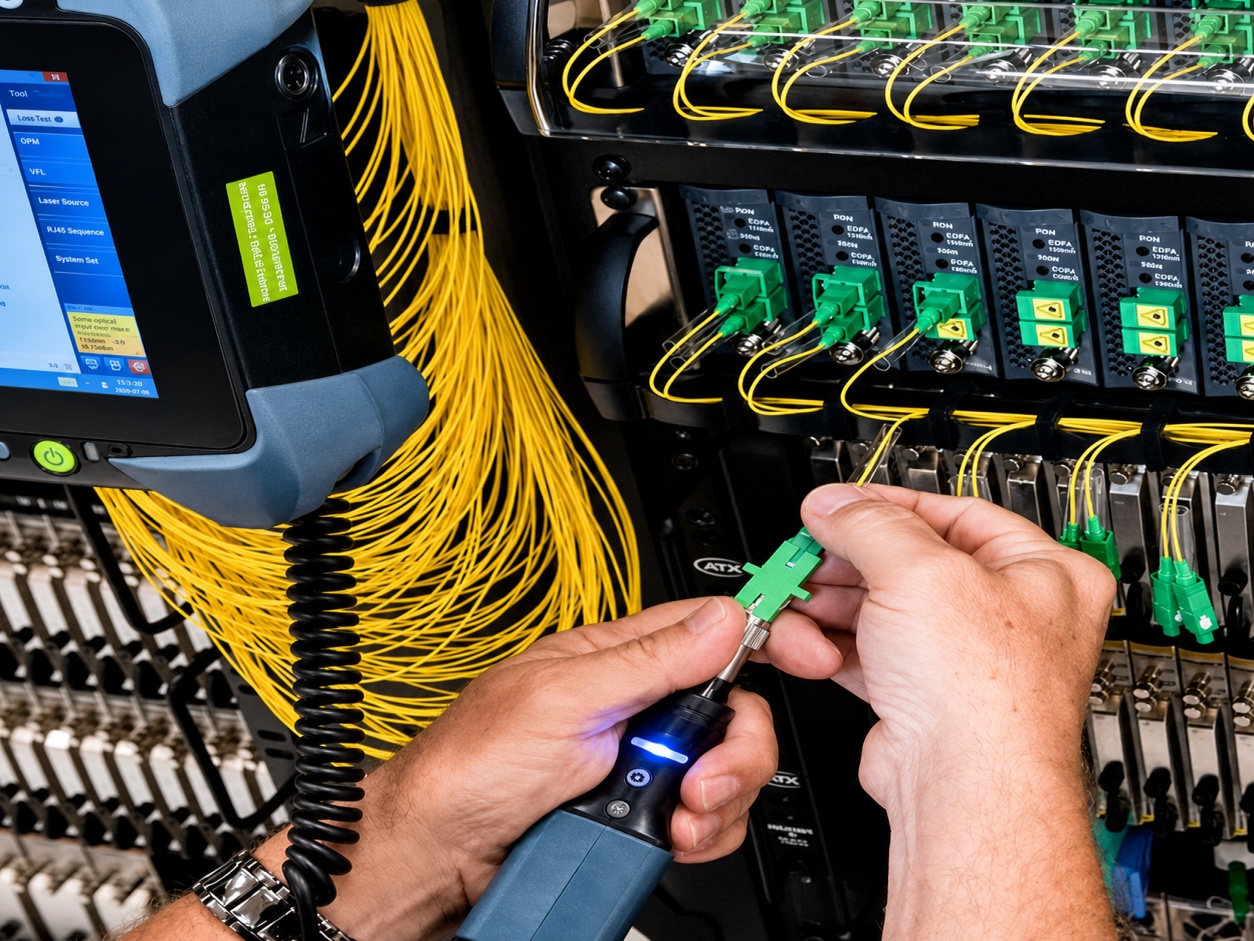
33. Include Cleaning Tools in the Cost Model

Connectorized networks require cleaning.
If cleaning tools are omitted from procurement, technicians may:
- Mate contaminated connectors
- Replace good components unnecessarily
- Create repeated service calls
The project cost model should include suitable:
- One-click cleaners
- Cassette cleaners
- Inspection tools
- Consumables
These costs are small compared with repeated troubleshooting.
34. Quality Problems Can Destroy Cost Savings
Saving a small amount on a splitter, adapter or connector is not commercially attractive if failure rates increase.
Poor-quality passive components can create:
- Higher insertion loss
- Unstable connections
- Connector damage
- Enclosure sealing issues
- Cable failures
The right procurement target is not:
lowest purchase price
but:
lowest acceptable cost at the required reliability level
35. Compare Production Consistency, Not Only Samples
High-volume FTTH projects need consistent production.
A supplier may provide an excellent sample but struggle to maintain performance across tens of thousands of pieces.
Buyers should evaluate:
- Production capacity
- Quality-control procedures
- Material consistency
- Optical testing
- Traceability
- Delivery capability
Supplier consistency becomes increasingly important as deployment volume grows.
36. Use Samples to Validate Installation Efficiency
Sample approval should not only check optical performance.
Installers can also evaluate:
- Mounting time
- Cable entry
- Splitter installation
- Fiber routing
- Port access
- Drop connection
- Maintenance
A component that passes laboratory testing but slows installation may not be the most cost-effective choice.
37. Calculate Cost Per Connected Subscriber
Total project cost should be translated into a useful commercial metric.
One practical measure is:
Passive Network Cost ÷ Connected Subscribers
But this number should also be viewed together with homes passed and future capacity.
For example, a network with higher initial cost may still be more economical if it supports future subscriber growth without major reconstruction.
38. Separate Initial CAPEX From Future Expansion Cost
A design decision can look cheaper in the first-year budget but much more expensive over five years.
For example:
Option A
Low fiber count, no spare ports, smaller boxes.
Lower initial cost.
Option B
Moderate reserve in feeder fibers and distribution points.
Higher initial cost.
If subscriber demand grows, Option B may avoid:
- New cable installation
- New closures
- Box replacement
- Additional civil work
Therefore, cost comparisons should include expected expansion scenarios.
39. Do Not Overbuild for Uncertain Growth
Future-proofing is valuable, but excessive reserve wastes capital.
If a rural area is unlikely to double in subscriber density, installing extremely oversized infrastructure may provide little return.
Future capacity should be based on:
- Expected growth
- Development plans
- Take-rate forecast
- Construction difficulty
The harder it is to upgrade later, the more reserve can be justified.
40. Use Modular Expansion Where Possible
Modular infrastructure can reduce initial cost while preserving growth potential.
Examples include:
- Cabinets that accept additional splitter modules
- Boxes with spare adapter positions
- Closures with expandable trays
- ODFs with modular panels
This allows the project to install structural capacity first and add active subscriber capacity later.
Modularity is often more economical than either extreme of under-building or fully populating every location immediately.
Practical Cost-Optimization Decision Process

Step 1 — Map Subscriber Demand
Define:
- Homes passed
- Expected subscribers
- Density
- Growth
Step 2 — Select Splitter Architecture
Compare:
- Centralized
- Cascaded
- Single-stage
- Multi-stage
Step 3 — Calculate Optical Budget
Confirm the selected architecture works technically.
Step 4 — Optimize Fiber Count
Size:
- Feeder cable
- Distribution cable
- Reserve fibers
Step 5 — Position Distribution Points
Minimize:
- Drop lengths
- Unnecessary boxes
- Installation complexity
Step 6 — Select Enclosure Capacities
Use standardized sizes appropriate to subscriber density.
Step 7 — Select Cable Construction
Avoid both under-specification and unnecessary over-engineering.
Step 8 — Choose Splicing vs Connectorization
Compare field labor with component cost.
Step 9 — Standardize Components
Reduce unnecessary SKUs.
Step 10 — Plan Expansion
Put reserve capacity where reconstruction would be expensive.
Step 11 — Review Installation Labor
Estimate:
- Splicing
- Mounting
- Termination
- Testing
Step 12 — Review Maintenance
Include:
- Cleaning
- Replacement
- Access
- Spares
Step 13 — Compare Lifecycle Cost
Choose based on the entire network rather than isolated unit prices.
Cost-Effective FTTH Architecture by Scenario
| Deployment Scenario | Cost Priority | Typical Design Direction |
| Dense urban area | Port density and labor efficiency | Larger distribution points, controlled splitters, short drops |
| MDU/apartment | Compact distribution and fast subscriber activation | Building distribution boxes, structured vertical cabling |
| Suburban area | Balance cable length and terminal quantity | Medium-capacity terminals close to subscriber clusters |
| Rural area | Minimize long distribution cable and civil work | Distributed splitting may be useful depending on topology |
| High labor-cost market | Reduce field work | Pre-connectorization and factory preparation can be attractive |
| Low labor-cost market | Balance equipment and labor | Fusion splicing may remain economical |
| Rapidly expanding area | Future reserve | Higher feeder capacity and modular distribution points |
| Mature stable area | Control initial CAPEX | Tighter capacity planning with limited reserve |
Common Cost-Optimization Mistakes
Mistake 1: Choosing the Lowest-Priced Component
This ignores installation and maintenance.
Mistake 2: Oversizing Every Cable and Box
Future capacity should be strategic, not unlimited.
Mistake 3: Under-Sizing Feeder Capacity
Adding feeder infrastructure later can be expensive.
Mistake 4: Using Too Many Small Boxes
More boxes mean more mounting and maintenance points.
Mistake 5: Excessive Connectorization
Every connector adds cost and optical interfaces.
Mistake 6: Excessive Fusion Splicing
Too much field splicing increases labor.
Mistake 7: Using One Heavy Cable for Every Network Section
Different sections have different requirements.
Mistake 8: Ignoring Drop-Cable Length
Small excess per subscriber becomes large at scale.
Mistake 9: Too Many Product Variants
SKU complexity creates hidden operational cost.
Mistake 10: Ignoring Future Upgrade Cost
Low initial CAPEX can create high reconstruction cost.
Example Cost Comparison Logic
Suppose two FTTH designs serve the same subscriber cluster.
Option A
- Smaller terminal
- More distribution points
- More mounting
- Shorter drops
- Lower box cost per unit
Option B
- Larger terminal
- Fewer distribution points
- Longer average drop
- Higher box cost per unit
The correct choice cannot be determined from terminal price alone.
Compare:
Box Cost + Installation + Drop Cable + Splicing + Maintenance
If Option B requires significantly more drop cable, the cheaper box count may not compensate.
If Option A requires many additional mounting locations and splices, the opposite may be true.
This is why FTTH cost optimization should be performed at network level.
RFQ Example for Cost-Controlled FTTH Procurement
Project: FTTH distribution network
Homes passed: [quantity]
Expected initial subscribers: [quantity]
Expected future subscribers: [quantity]
Network type: [GPON / XGS-PON / other]
Splitting architecture: [centralized / cascaded]
Final split ratio: [requirement]
Feeder Cable
Fiber count: [XXF]
Route: [duct / aerial]
Length: [km]
Future reserve: [requirement]
Distribution Cable
Fiber count: [XXF]
Route: [aerial / duct / wall]
Branching method: [closure / mid-span]
PLC Splitter
Ratio: [requirement]
Package: [mini tube / cassette / LGX]
Connector: [SC/APC / other]
Distribution Terminal
Capacity: [8 / 16 / 24 / 32 ports]
Installation: [pole / wall]
Splitter support: [requirement]
Preloaded components: [if required]
Drop Cable
Fiber: [requirement]
Cable type: [flat / round]
Standard lengths: [if applicable]
Termination: [pre-connectorized / field]
Commercial Evaluation
Supplier should provide:
- Unit price
- Packaging
- Installation accessories
- Lead time
- Production capacity
- Test documentation
- Recommended standard configurations
This allows comparison based on complete deployment economics.
Pre-Purchase Cost Checklist
- Subscriber density has been mapped
- Homes passed and homes connected are separated
- Take rate has been estimated
- Splitter architecture is optimized
- Optical budget is confirmed
- Feeder fiber count includes strategic reserve
- Distribution fiber count is not oversized
- Terminal locations minimize unnecessary drop length
- Box capacity matches local subscriber density
- Too many small boxes have been avoided
- Closure quantity is optimized
- Cable construction matches each route
- Unnecessary armoring is avoided
- Drop lengths are controlled
- Standard lengths are used where practical
- Splicing and connectorization costs are compared
- Factory preparation is considered
- Product variants are standardized
- Spare-parts inventory is simplified
- Cleaning tools are budgeted
- Installation labor has been estimated
- Maintenance access has been reviewed
- Supplier production consistency is evaluated
- Future expansion cost is considered
- Total cost per connected subscriber is reviewed
Expert Recommendation
A cost-effective FTTH distribution network should be optimized around network economics, not component discount levels.
Start by controlling subscriber density, splitter architecture and fiber count.
Then optimize distribution-point placement because this affects cable length, box quantity and field labor.
Standardize a limited number of cable, splitter and enclosure configurations wherever practical.
Use fusion splicing for permanent infrastructure where it reduces connector count, and use pre-connectorized products where they genuinely save installation labor.
Reserve capacity should be concentrated in parts of the network that are expensive to rebuild, especially feeder infrastructure.
Most importantly, compare the total cost of:
Materials + Installation + Tools + Testing + Maintenance + Expansion
A component that costs 10% more may still reduce total network cost if it saves enough field labor or avoids future reconstruction.
FAQ
What is the biggest cost driver in an FTTH distribution network?
It varies by market. Civil construction, labor, fiber cable, distribution infrastructure and subscriber activation can all be significant. The network should therefore be optimized as a complete system.
Is centralized splitting always cheaper than cascaded splitting?
No. Centralized splitting can simplify management but may require more distribution fibers. Cascaded splitting can reduce fiber count but adds splitter locations and optical complexity.
Should FTTH networks always use the highest possible split ratio?
No. Higher split ratios reduce feeder fiber requirements but increase optical loss and may reduce design flexibility.
How much spare fiber should be installed?
There is no universal percentage. More reserve is justified where future cable installation would be expensive. Reserve should reflect growth expectations and reconstruction cost.
Are pre-connectorized FTTH networks cheaper?
They can reduce field labor and activation time, but component cost is often higher. The result depends on local labor rates, project scale and installation method.
Is it cheaper to use many small distribution boxes?
Not necessarily. More boxes can increase mounting, splicing, documentation and maintenance costs. Capacity should match subscriber density.
Can lower-cost passive components significantly reduce FTTH project cost?
Only if quality and installation efficiency remain acceptable. Component price is one part of total project economics.
What is the best way to compare two FTTH designs commercially?
Compare material cost, installation labor, cable length, splitter architecture, maintenance requirements and future expansion cost rather than only the BOM value.
Related Guides
- How to Design an FTTH Network: A Complete Buyer’s Decision Guide
- How to Choose Passive Components for an FTTH Network
- How to Reduce FTTH Installation Costs Without Sacrificing Quality
- Common FTTH Network Design Mistakes and How to Avoid Them
- How to Plan FTTH Networks for Future Capacity Expansion
Key Takeaways
A cost-effective FTTH distribution network is not created by buying every passive component at the lowest price.
The strongest cost-control strategy is:
Demand → Architecture → Splitter Strategy → Fiber Count → Distribution Points → Cable Construction → Installation → Maintenance → Expansion → Total Cost
The most important commercial decisions are:
- Match architecture to subscriber density
- Optimize splitter placement
- Control feeder and distribution fiber count
- Position terminals to reduce drop length
- Standardize component families
- Balance splicing with connectorization
- Avoid unnecessary over-engineering
- Reserve capacity where reconstruction is expensive
- Reduce SKUs and spare-part complexity
- Compare lifecycle cost per connected subscriber
The best FTTH distribution network is not the cheapest network to purchase.
It is the network that delivers the required coverage and reliability with the lowest practical total cost to install, operate and expand.
Keywords
cost-effective FTTH network, FTTH distribution network, FTTH network cost, FTTH cost optimization, FTTH splitter design, FTTH fiber count, FTTH distribution box, FTTH installation cost, FTTH feeder cable, FTTH distribution cable, FTTH drop cable, FTTH PLC splitter, FTTH network planning, passive optical network cost, FTTH procurement, FTTH rollout cost, FTTH infrastructure planning, FTTH lifecycle cost



 Get Your Best Price Now!