
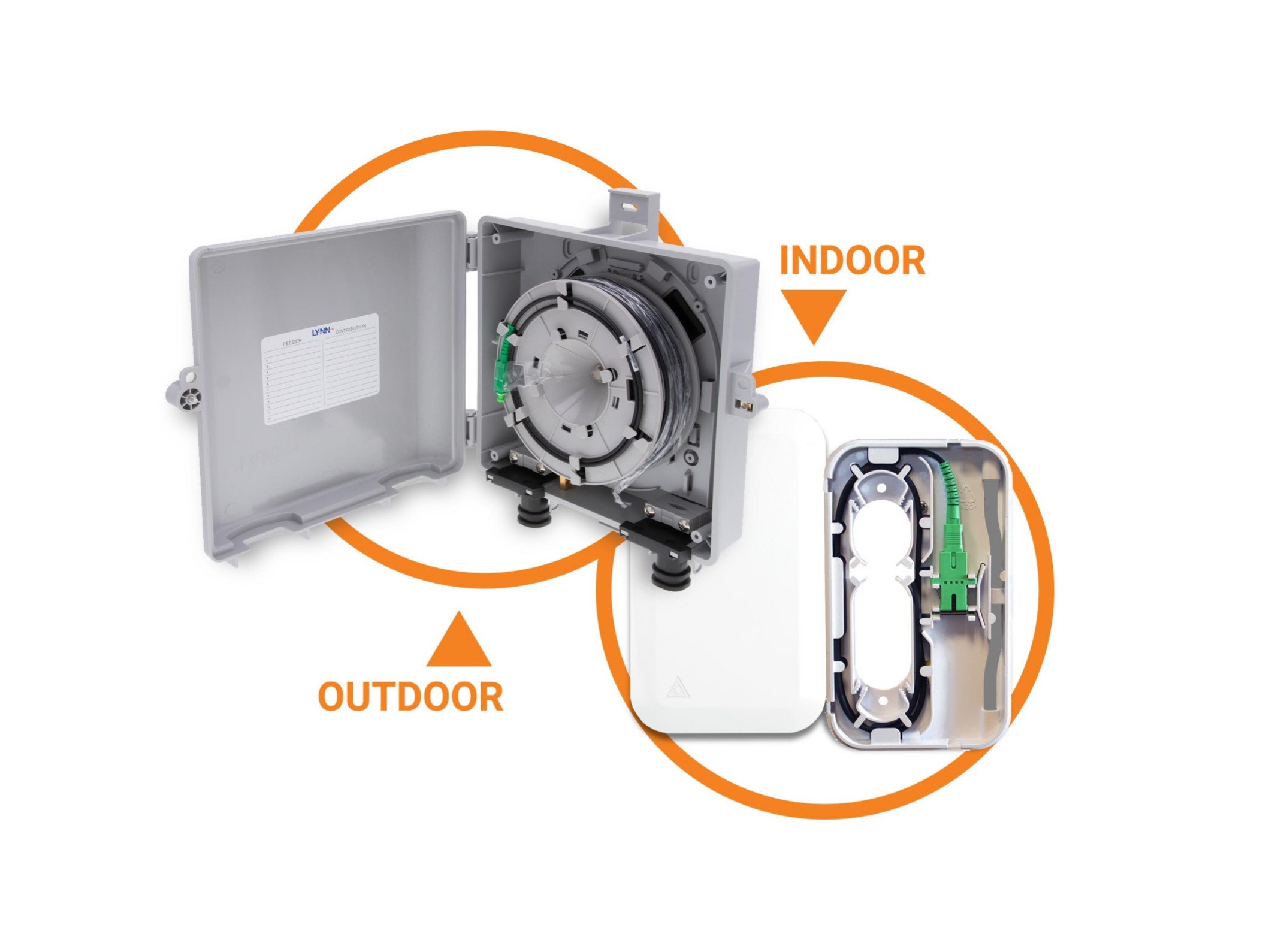
Fiber distribution boxes are widely used in FTTH networks to organize, protect, and distribute optical fibers between feeder cables, splitters, and subscriber connections.
However, not all fiber distribution boxes are designed for the same environment.
The choice between an indoor fiber distribution box and an outdoor fiber distribution box directly affects:
- Network reliability
- Installation efficiency
- Maintenance convenience
- Long-term operational costs
An indoor box installed outdoors may experience environmental damage, while an outdoor box used indoors may introduce unnecessary cost and complexity.
The correct selection depends on where the box will be installed, what protection level is required, and how the network will be maintained in the future.
This guide explains the differences between indoor and outdoor fiber distribution boxes and helps buyers select the right type for FTTH, MDU, enterprise, and access network projects.
Quick Answer
Choose an indoor fiber distribution box when:
- The installation location is protected from weather exposure
- The environment is controlled
- Compact design and easy access are priorities
- The box is installed inside buildings or equipment rooms
Choose an outdoor fiber distribution box when:
- The box is installed outside buildings
- Weather resistance is required
- Moisture, dust, and UV exposure are concerns
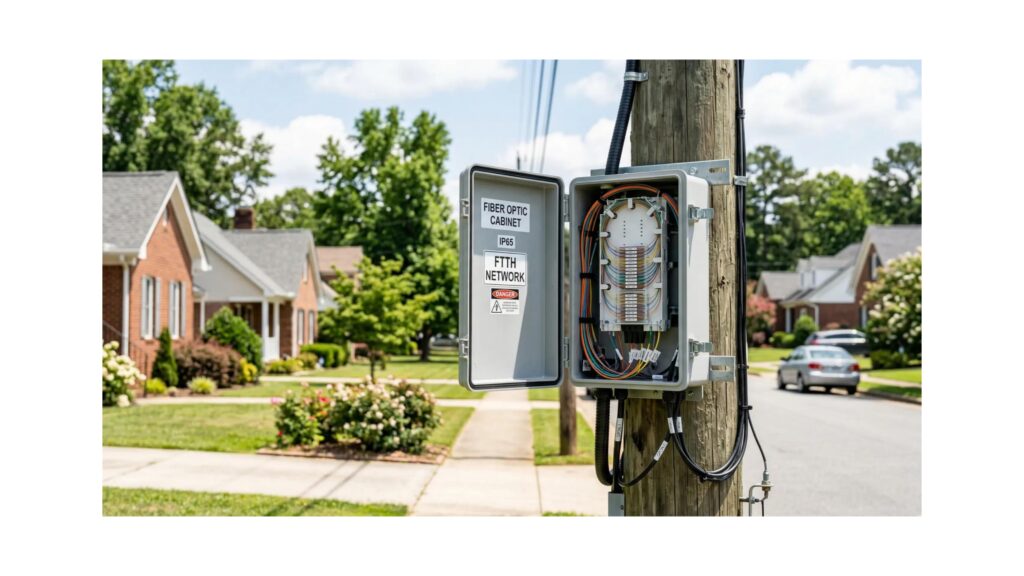
- Pole or wall-mounted outdoor deployment is needed
| Application | Recommended Box Type |
| Apartment corridor | Indoor Distribution Box |
| Equipment room | Indoor Distribution Box |
| Residential outdoor wall | Outdoor Distribution Box |
| Pole-mounted FTTH | Outdoor Distribution Box |
| Rural access network | Outdoor Distribution Box |
| Outdoor cabinet | Outdoor Distribution Box |
The best choice is determined by the installation environment, not simply by the number of ports or box size.
What Is an Indoor Fiber Distribution Box?
An indoor fiber distribution box is designed for protected environments where exposure to harsh outdoor conditions is limited.
Typical installation locations include:
- Apartment buildings
- Communication rooms
- Equipment rooms
- Building corridors
- Enterprise facilities
Indoor distribution boxes are mainly designed to provide:
- Fiber organization
- Splicing protection
- Splitter installation
- Subscriber fiber management
Their design usually focuses on:
- Compact structure
- Easy access
- Efficient installation
- Convenient maintenance
Because indoor environments are relatively controlled, these boxes generally do not require the same level of environmental protection as outdoor models.
What Is an Outdoor Fiber Distribution Box?
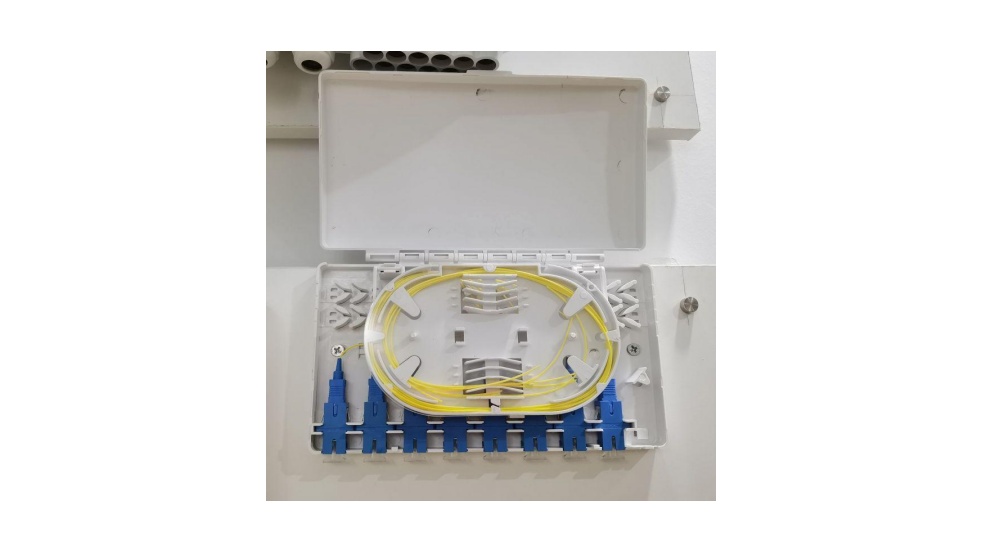
An outdoor fiber distribution box is designed to operate in exposed environments where additional protection is required.
Typical installation locations include:
- Outdoor walls
- Utility poles
- Street-side locations
- Outdoor cabinets
- Rural FTTH networks
Outdoor distribution boxes are designed to protect internal components against:
- Rain
- Dust
- Temperature changes
- UV exposure
- Environmental contamination
Their design usually emphasizes:
- Enclosure protection
- Cable sealing
- Mechanical durability
- Long-term outdoor reliability
Indoor vs Outdoor Fiber Distribution Boxes at a Glance
| Feature | Indoor Distribution Box | Outdoor Distribution Box |
| Installation Environment | Protected indoor areas | Outdoor exposed areas |
| Weather Protection | Limited requirement | Higher requirement |
| UV Resistance | Usually unnecessary | Required |
| Moisture Protection | Moderate | Strong |
| Cable Sealing | Basic | Enhanced |
| Typical Mounting | Wall-mounted | Wall/pole/cabinet |
| Main Priority | Easy access | Environmental protection |
Step 1: Identify the Installation Location
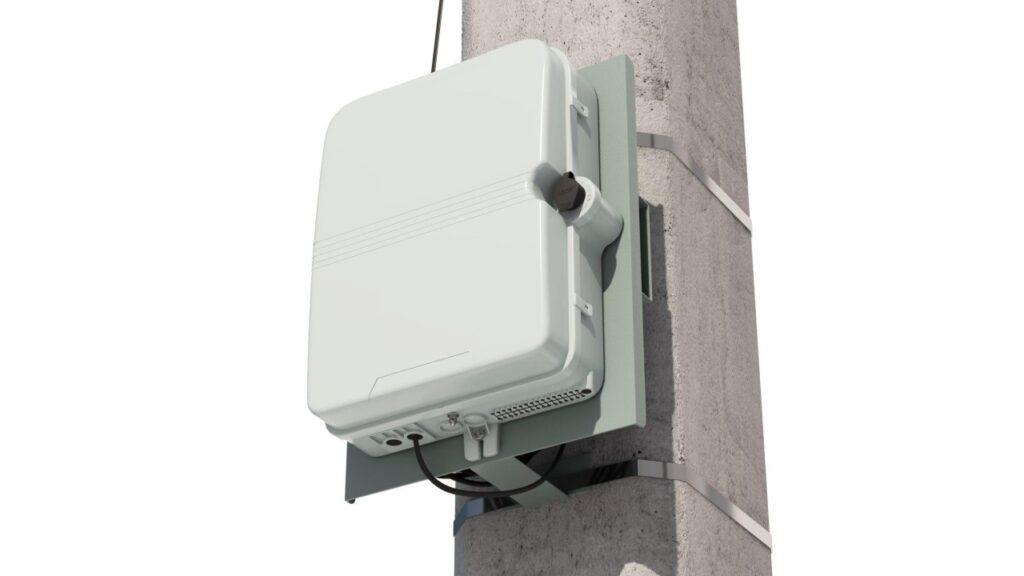
The first decision is determining where the distribution box will physically operate.
Indoor Installation
Typical locations:
- Building entrance rooms
- Floor distribution areas
- Data rooms
- Telecom closets
Important considerations:
- Space availability
- Fiber organization
- Technician access
- Building requirements
Indoor boxes are usually optimized for convenient operation and maintenance.
Outdoor Installation
Typical locations:
- Utility poles
- Exterior walls
- Underground access points
- Outdoor cabinets
Important considerations:
- Weather exposure
- Temperature changes
- Water protection
- Physical security
Outdoor boxes must provide stronger protection because maintenance access may be more difficult.
Step 2: Evaluate Environmental Protection Requirements
Environmental conditions are one of the biggest differences between indoor and outdoor boxes.
Indoor Distribution Box Requirements
Indoor applications typically focus on:
- Fiber management
- Easy installation
- Compact dimensions
- Clean organization
Protection against rain and UV exposure is usually not a primary concern.
Outdoor Distribution Box Requirements
Outdoor applications require additional protection against:
- Water penetration
- Dust
- Sunlight exposure
- Temperature variation
- External impact
Important design considerations include:
- Sealed cable entries
- Weather-resistant housing
- UV-resistant materials
- Secure closure mechanisms
Using an indoor box in an outdoor environment may reduce network reliability over time.
Step 3: Consider FTTH Network Architecture
The network position also affects box selection.
| Network Location | Recommended Box |
| Building Floor Distribution | Indoor Box |
| MDU Communication Room | Indoor Box |
| Outdoor Distribution Point | Outdoor Box |
| Rural Pole Deployment | Outdoor Box |
| Subscriber Building Entrance | Indoor/Outdoor Depending on Location |
The same FTTH project may use both indoor and outdoor distribution boxes in different sections.
Step 4: Compare Installation Methods
Different installation methods create different requirements.
Indoor Wall-Mounted Installation
Advantages:
- Easy access
- Simple installation
- Convenient maintenance
- Compact design
Common applications:
- Apartments
- Offices
- Buildings
Outdoor Wall-Mounted Installation
Requirements:
- Strong enclosure
- Weather resistance
- Secure cable entry
- Long-term protection
Common applications:
- Residential outdoor areas
- Building exterior walls
Pole-Mounted Installation
Pole-mounted boxes require:
- Mechanical stability
- Outdoor protection
- Secure mounting accessories
- Resistance to environmental exposure
They are commonly used in:
- Rural FTTH
- Aerial access networks
- Suburban deployments
Step 5: Consider Maintenance Requirements
Maintenance conditions should influence the box selection.
Indoor Boxes
Advantages:
- Easy technician access
- Faster troubleshooting
- Convenient fiber management
Suitable for locations where regular maintenance access is available.
Outdoor Boxes
Advantages:
- Protect fibers in exposed locations
- Support distributed access networks
- Reduce environmental damage risks
However, outdoor boxes should provide:
- Clear fiber organization
- Reliable sealing
- Easy access procedures
A good outdoor box balances protection and maintenance convenience.
Step 6: Evaluate Capacity and Expansion Requirements
Although environmental protection is the main difference between indoor and outdoor distribution boxes, capacity planning remains equally important.
Before selecting a box, consider:
- Number of subscribers
- Feeder fiber count
- Splitter configuration
- Future expansion
- Available installation space
Both indoor and outdoor boxes are available in different capacities.
| Capacity Range | Typical Application |
| 8–16 Ports | Small residential deployments |
| 24–48 Ports | Standard FTTH projects |
| 64–96 Ports | Dense residential or MDU projects |
| 144 Ports and Above | Large-scale access networks |
A common mistake is choosing an outdoor box only because the project is large, or choosing an indoor box only because the capacity requirement is small.
Capacity and environmental requirements should be evaluated separately.
Step 7: Consider Splitter Installation Requirements
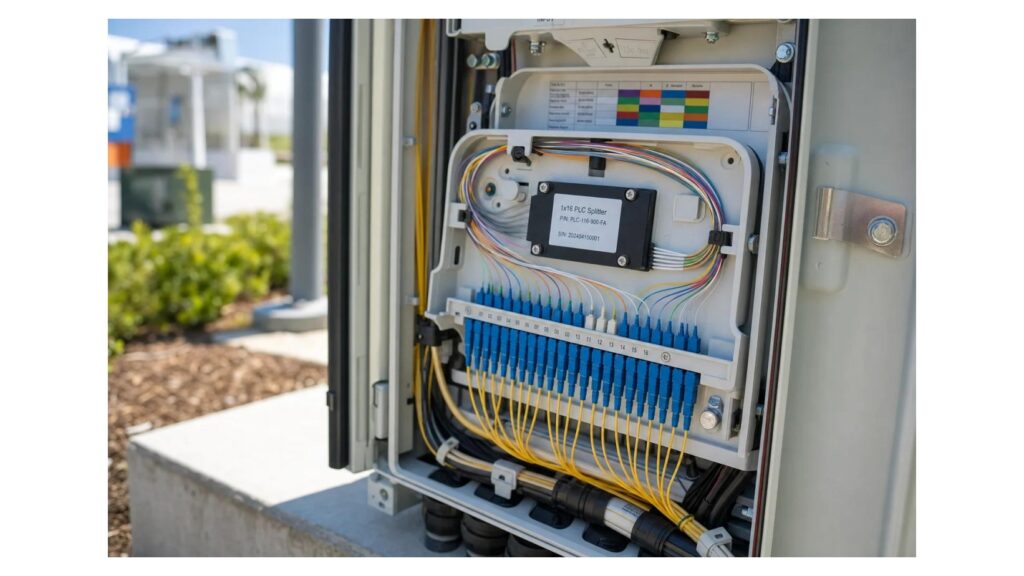
FTTH distribution boxes often contain PLC splitters, making splitter compatibility an important selection factor.
Confirm:
- Splitter type
- Splitter quantity
- Module size
- Splice tray compatibility
- Fiber routing space
Common splitter configurations include:
| Splitter Type | Typical Application |
| 1×8 PLC Splitter | Small subscriber groups |
| 1×16 PLC Splitter | Residential FTTH |
| 1×32 PLC Splitter | Common PON deployment |
| 1×64 PLC Splitter | High-density access networks |
An indoor box may prioritize easy maintenance access, while an outdoor box may require additional space for protection and cable sealing.
Step 8: Compare Material and Structural Requirements
The enclosure material directly affects long-term reliability.
Indoor Distribution Boxes
Common priorities:
- Lightweight structure
- Compact design
- Easy installation
- Clean appearance
Typical materials focus on indoor usability.
Outdoor Distribution Boxes
Common priorities:
- Weather resistance
- Mechanical strength
- UV resistance
- Long-term durability
Outdoor boxes usually require stronger housing designs to withstand environmental exposure.
Step 9: Balance Protection and Cost
A common purchasing question is:
“Should we always choose an outdoor fiber distribution box because it provides better protection?”
The answer is not always yes.
Outdoor boxes generally involve:
- Higher material cost
- More complex construction
- Additional sealing features
If the box will be installed inside a controlled environment, these additional features may not provide meaningful value.
The correct approach is:
- Use indoor boxes where environmental risks are low.
- Use outdoor boxes where protection is required.
Selecting the appropriate protection level helps optimize both reliability and project cost.
Application-Based Recommendations
Apartment FTTH Projects
Typical environment:
- Building corridors
- Telecom rooms
- Floor distribution areas
Recommended choice:
Indoor Fiber Distribution Box
Important features:
- Compact size
- Easy maintenance
- SC/APC adapter support
- Splitter installation capability
MDU (Multi-Dwelling Unit) Projects
MDU projects often require higher subscriber density.
Recommended choice:
Indoor High-Capacity Distribution Box
Important features:
- Large fiber capacity
- Organized fiber management
- Modular splitter support
- Future expansion capability
Rural FTTH Projects
Typical environment:
- Utility poles
- Outdoor walls
- Distributed access points
Recommended choice:
Outdoor Fiber Distribution Box
Important features:
- Weather-resistant enclosure
- Strong cable sealing
- Pole/wall mounting options
- Easy field maintenance
Urban Outdoor FTTH Projects
Urban networks may use outdoor boxes in:
- Street cabinets
- Exterior walls
- Underground access points
Important requirements:
- Compact outdoor design
- Secure enclosure
- Efficient fiber management
- High subscriber density support
Advantages of Indoor Fiber Distribution Boxes
Indoor boxes provide:
- Easier technician access
- Lower material cost
- Compact installation
- Simple maintenance
- Efficient indoor fiber organization
They are ideal where environmental exposure is limited.
Advantages of Outdoor Fiber Distribution Boxes
Outdoor boxes provide:
- Better environmental protection
- Weather resistance
- UV protection
- Flexible outdoor deployment
- Suitable protection for distributed access networks
They are essential where network equipment is exposed to outdoor conditions.
Common Purchasing Mistakes
Mistake 1: Using Indoor Boxes Outdoors
This is one of the most common mistakes.
Potential problems include:
- Water ingress
- Material aging
- Fiber contamination
- Increased maintenance requirements
Always confirm the actual installation environment before purchasing.
Mistake 2: Choosing Outdoor Boxes for Every Application
Outdoor protection is valuable, but it is not always necessary.
Using outdoor boxes indoors may increase:
- Cost
- Installation complexity
- Product size
The protection level should match the actual environment.
Mistake 3: Ignoring Cable Entry Requirements
A distribution box must match the installed cable types.
Confirm:
- Feeder cable size
- Drop cable quantity
- Cable sealing method
- Cable routing space
Incorrect cable entry design can create installation difficulties.
Mistake 4: Selecting Based Only on Port Count
Port count is important, but it is not the only factor.
Also evaluate:
- Fiber management
- Splitter compatibility
- Environmental protection
- Maintenance access
Mistake 5: Not Considering Future Expansion
A box that meets current requirements may become insufficient later.
Consider:
- Additional subscribers
- More splitters
- Network upgrades
- Spare capacity
How to Specify Indoor or Outdoor Fiber Distribution Boxes
Before requesting quotations, buyers should provide complete project requirements to ensure suppliers recommend the correct distribution box design.
A complete specification should include:
- Installation environment (indoor or outdoor)
- Application type (FTTH, MDU, rural, enterprise)
- Mounting method
- Fiber capacity
- Number of adapter ports
- Splitter configuration
- Adapter type
- Feeder and drop cable requirements
- Splice capacity
- Protection requirements
- Material requirements
- Operating temperature conditions
- Packaging requirements
- Required documentation
Providing complete specifications helps avoid receiving a box that has the correct capacity but unsuitable environmental protection or installation design.
Example Specification – Indoor FTTH Distribution Box
| Item | Specification |
| Application | Apartment FTTH Distribution |
| Installation | Indoor Wall-Mounted |
| Fiber Capacity | 48 Fibers |
| Splitter Support | 1×8 / 1×16 PLC Splitter |
| Adapter Type | SC/APC |
| Fiber Management | Splicing and Distribution Integrated |
| Cable Entry | Feeder + Drop Cable Ports |
| Quantity | 300 pcs |
| Documentation | Product Datasheet |
Example Specification – Outdoor FTTH Distribution Box
| Item | Specification |
| Application | Rural FTTH Deployment |
| Installation | Outdoor Wall/Pole-Mounted |
| Fiber Capacity | 96 Fibers |
| Splitter Support | 1×16 / 1×32 PLC Splitter |
| Adapter Type | SC/APC |
| Protection | Outdoor Weather-Resistant Enclosure |
| Fiber Management | Splitter, Splicing and Drop Fiber Management |
| Quantity | 200 pcs |
| Documentation | Product Specification & Inspection Report |
Example Specification – MDU High-Density Distribution Box
| Item | Specification |
| Application | Multi-Dwelling Unit FTTH |
| Installation | Indoor Communication Room |
| Fiber Capacity | 144 Fibers |
| Splitter Support | Modular PLC Splitter |
| Adapter Type | SC/APC |
| Fiber Management | High-Density Routing Design |
| Quantity | 100 pcs |
| Documentation | Product Datasheet |
Expert Recommendation
Choosing between indoor and outdoor fiber distribution boxes should start with the installation environment, not the product appearance or price.
A practical selection process is:
- Identify where the distribution box will be installed.
- Evaluate environmental exposure such as moisture, dust, UV, and temperature changes.
- Confirm required subscriber capacity and splitter configuration.
- Match the box structure with the cable entry and maintenance requirements.
- Consider future expansion and long-term network operation.
For most FTTH projects:
- Indoor distribution boxes are suitable for apartment buildings, communication rooms, and protected installation areas where easy access and compact design are important.
- Outdoor distribution boxes are required for exposed locations such as poles, outdoor walls, and rural access networks where environmental protection is critical.
The best choice is not the box with the highest protection level. It is the box that provides the appropriate protection, capacity, and maintenance efficiency for the actual FTTH deployment environment.
FAQ
Can an indoor fiber distribution box be installed outdoors?
Generally, no.
Indoor boxes are not designed to withstand long-term exposure to rain, UV radiation, dust, and temperature changes. Outdoor environments require boxes with appropriate environmental protection.
Are outdoor fiber distribution boxes better than indoor boxes?
Not necessarily.
Outdoor boxes provide stronger environmental protection, but indoor boxes may be more suitable because they are usually more compact, easier to access, and more cost-effective in controlled environments.
Which fiber distribution box is commonly used in FTTH projects?
The choice depends on the deployment scenario.
Residential buildings often use indoor wall-mounted boxes, while rural and outdoor access networks commonly use weather-resistant outdoor boxes.
What protection level is required for outdoor fiber distribution boxes?
The required protection depends on the installation environment.
Outdoor boxes should provide suitable protection against moisture, dust, UV exposure, and mechanical stress according to the deployment conditions.
Can the same PLC splitter be installed in indoor and outdoor distribution boxes?
In many cases, yes, but the box design must provide suitable splitter mounting space, fiber routing, and protection.
Splitter compatibility should be confirmed before purchasing.
Should MDU projects use indoor or outdoor distribution boxes?
Most MDU projects use indoor distribution boxes because they are usually installed in communication rooms, corridors, or building spaces.
Outdoor boxes may be used when distribution points are located outside buildings.
How do I choose between wall-mounted and pole-mounted distribution boxes?
The mounting method should match the physical deployment location.
Wall-mounted boxes are common for buildings, while pole-mounted boxes are commonly used in rural and aerial FTTH networks.
What is the biggest mistake when choosing indoor and outdoor fiber distribution boxes?
The biggest mistake is selecting based only on capacity or price while ignoring installation environment, protection requirements, and long-term maintenance needs.
Related Guides
- How to Choose the Right Fiber Distribution Box: A Complete Buyer’s Decision Guide
- Which Fiber Distribution Box Is Best for FTTH Deployment?
- How to Select the Right Capacity for Fiber Distribution Boxes
- How to Choose the Right Splitter Configuration Inside a Distribution Box
- Wall-Mounted or Pole-Mounted: Which Distribution Box Should You Choose?
Key Takeaways
- Indoor and outdoor fiber distribution boxes are designed for different operating environments.
- Indoor boxes prioritize accessibility, compact design, and efficient fiber management.
- Outdoor boxes prioritize environmental protection, weather resistance, and long-term durability.
- The correct choice depends on installation location, splitter requirements, subscriber capacity, and maintenance strategy.
- Selecting the appropriate distribution box helps reduce installation problems and improves FTTH network reliability.
Keywords
indoor fiber distribution box, outdoor fiber distribution box, FTTH distribution box, fiber optic distribution box, FDB box, indoor vs outdoor fiber box, FTTH deployment, PLC splitter box, wall mounted fiber distribution box, pole mounted fiber distribution box, MDU fiber distribution, rural FTTH network, fiber access network, optical distribution box, fiber enclosure, FTTH network design, fiber optic infrastructure, passive optical network, fiber deployment, fiber box selection


 Get Your Best Price Now!